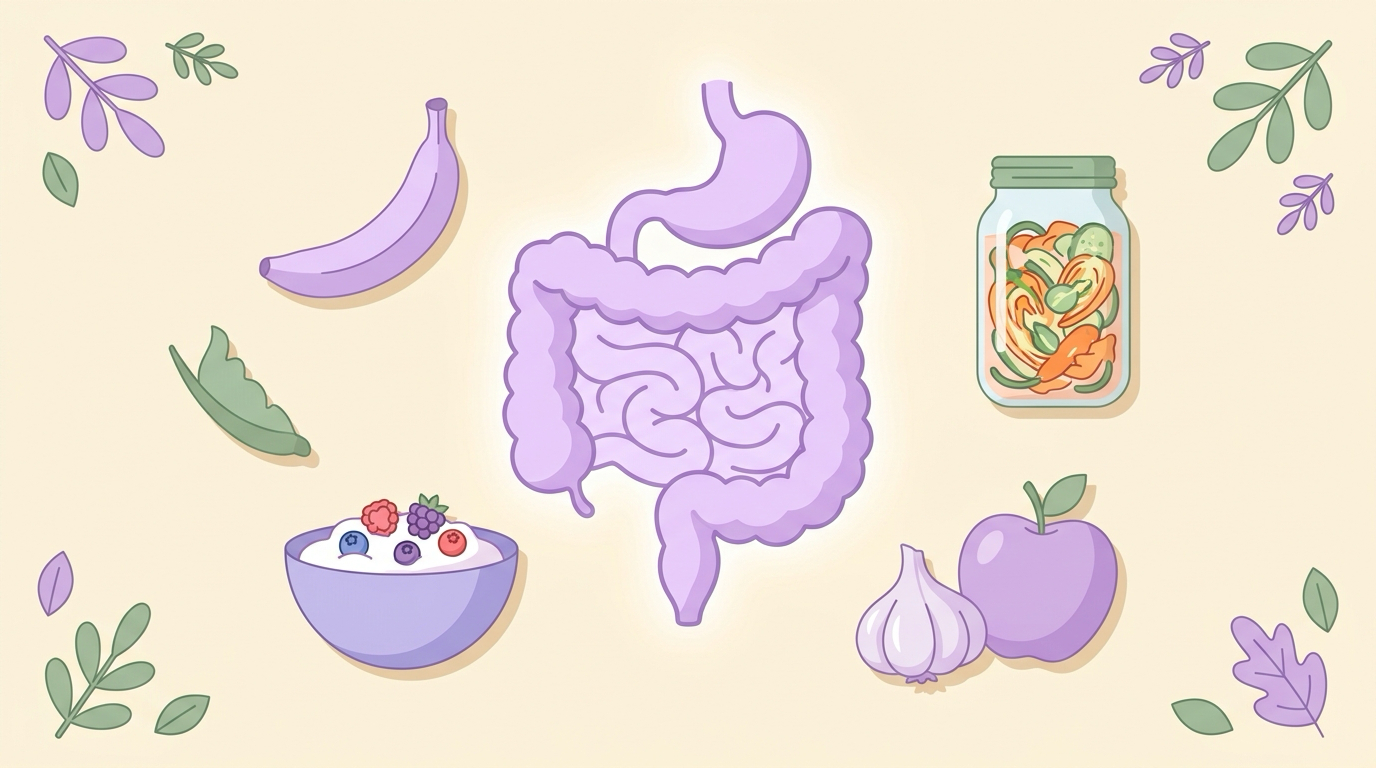
If you want to improve your gut health, the most effective starting point is fiber — specifically prebiotic fiber that feeds beneficial bacteria — followed by fermented foods that add live bacteria directly. Everything else builds on those two things.
Most guides make this more complicated than it needs to be. Here’s what the research actually shows, what to eat, what genuinely damages the microbiome, and what a realistic starting point looks like.
What “Gut Health” Actually Means
Your gut contains roughly 100 trillion microorganisms — bacteria, fungi, and others — collectively called the microbiome. They’re not just passengers. They break down fiber into compounds that feed your gut lining, produce about 90% of your body’s serotonin, regulate your immune system, and communicate with your brain via the vagus nerve.
A healthy microbiome is diverse — many different species doing different jobs. A damaged one is low-diversity, with harmful bacteria crowding out beneficial ones. Most gut health interventions come down to one goal: increasing that diversity.
Foods That Build a Healthier Gut
Prebiotic Fiber (What the Good Bacteria Eat)
Probiotics are the live bacteria you consume. Prebiotics are what those bacteria eat. You need both — but most people are severely short on prebiotics.
The recommended daily intake is 25–38 grams. The average intake is around 15 grams.
Best sources:
- Garlic and onions — among the most concentrated prebiotic sources available
- Oats — also high in beta-glucan, which specifically feeds Bifidobacterium
- Bananas (slightly underripe have more resistant starch)
- Legumes: lentils, chickpeas, black beans
- Leeks and asparagus
- Apples with the skin
Lentils are one of the most practical options — cheap, easy to batch cook, and among the highest prebiotic fiber foods you’ll find. If you already do any kind of meal prep on Sundays, adding a weekly batch of lentils covers a large portion of your prebiotic needs at minimal cost.
Fermented Foods (Live Probiotics)
Fermented foods introduce live beneficial bacteria directly. Food-based probiotics tend to outperform supplements — they arrive with a natural matrix that helps survival through stomach acid.
What works:
- Plain yogurt — must say “live and active cultures.” Avoid flavored versions with high added sugar, which negates the benefit
- Kefir — fermented milk drink with more bacterial strains than most yogurts
- Sauerkraut — refrigerated only. Shelf-stable canned versions are pasteurized (bacteria killed)
- Kimchi — same rule: refrigerated only
- Miso — fermented soybean paste, works in soups and dressings
- Kombucha — fermented tea; live culture amounts vary significantly by brand
One thing that actually sticks: plain Greek yogurt at breakfast most days. That alone covers daily probiotic exposure without any other changes.
Polyphenols (Bacteria Fuel You Probably Already Eat)
Polyphenols are plant compounds that feed beneficial bacteria — particularly Bifidobacterium, one of the most important strains for gut health.
High-polyphenol sources include berries, dark chocolate (70%+ cacao), green tea, extra virgin olive oil, red onions, and coffee. Coffee is actually one of the highest polyphenol sources in the average American diet.
Diverse Plant Foods
A study called the American Gut Project found that people eating 30 or more different plant foods per week had significantly more diverse microbiomes than those eating 10 or fewer. The difference was larger than almost any other dietary factor measured.
30 plants sounds like a lot until you count: herbs, spices, nuts, and seeds all count toward the total. A meal with chicken, sweet potato, spinach, garlic, and olive oil already hits 4 plants.
What Damages Gut Health
Ultra-Processed Foods
This is the biggest factor. Ultra-processed foods — packaged snacks, fast food, most convenience items — consistently reduce microbiome diversity.
The mechanisms: near-zero fiber content starves beneficial bacteria, artificial emulsifiers (carboxymethylcellulose, polysorbate 80) damage the gut lining in animal studies, and high sugar selectively feeds pathogenic bacteria at the expense of Bacteroidetes and Lactobacillus species.
Antibiotics
A single course of antibiotics can alter the gut microbiome for up to a year. They don’t discriminate between harmful and beneficial bacteria. When antibiotics are medically necessary, take them — but support recovery afterward with probiotic supplements (timed away from the antibiotic dose) and increased fermented food intake for several weeks.
Excess Sugar
Added sugar in large quantities feeds pathogenic bacteria and yeast while depleting Akkermansia muciniphila, a key strain that maintains gut lining integrity. Whole fruit is fine — the fiber modulates sugar absorption. The issue is added sugar in drinks and processed food.
Chronic Stress
Stress isn’t food, but it belongs here. Sustained high cortisol directly alters gut bacteria composition, reduces gut motility, and increases intestinal permeability — independently of diet. Managing stress is gut health maintenance, not just wellness advice.
Excessive Alcohol
Chronic heavy drinking shifts the microbiome toward an inflammatory profile — more gram-negative bacteria that produce endotoxins, less Lactobacillus and Bifidobacterium. Moderate occasional drinking has less clear effects, but if gut symptoms are an issue, alcohol is one of the first variables worth testing.
A Realistic Starting Point
You don’t need to overhaul everything at once. Three changes cover most of the benefit:
- Add one fermented food daily — plain yogurt at breakfast is the easiest entry point
- Include a prebiotic-rich food with most meals — garlic in cooking, banana as a snack, lentils or chickpeas 2–3 times per week
- Reduce ultra-processed snacks — replace with nuts, fruit, or yogurt
Most people notice changes in digestion and energy within 2–4 weeks of consistent eating pattern changes. The microbiome responds quickly — studies show meaningful shifts within 3–4 days of dietary change, with fuller benefits building over weeks.
Common Questions
Do I need probiotic supplements? Evidence on supplements is mixed. Many strains don’t survive stomach acid reliably, and most don’t colonize the gut long-term. Food-based probiotics tend to perform better in research. If you want to try supplements, look for multi-strain products with Lactobacillus acidophilus, L. rhamnosus, and Bifidobacterium longum. Start with food first — it’s cheaper and more evidence-backed.
Is bloating a sign of bad gut health? Not necessarily. Increased fiber causes temporary bloating as bacteria adjust to new fuel. This typically resolves within 2–3 weeks. Persistent symptoms beyond that are worth discussing with a doctor.
Does intermittent fasting help? There’s emerging evidence that time-restricted eating gives the gut lining repair time and allows bacteria to complete metabolic cycles. Some studies show improved diversity with 14–16 hour fasting windows. It’s not required, but it may support other gut health efforts.
What’s the difference between probiotics and prebiotics? Probiotics are live bacteria you consume — in fermented foods or supplements. Prebiotics are the fiber those bacteria eat. You need both. Probiotics bring in beneficial bacteria; prebiotics feed the ones you already have and the ones you’re adding.