You Don’t Need to Buy Better Sleep
The single most effective thing you can do tonight costs exactly zero dollars: wake up at the same time tomorrow morning. No exceptions. That one habit — a fixed wake time, every day — resets your circadian rhythm faster than any supplement or gadget on the market.
Sleep optimization has become a buying sport. White noise machines, weighted blankets, magnesium gummies, cooling mattress pads — the list is endless and the bill is staggering. Here’s the thing — the research on free behavioral changes is just as strong, often stronger, than the research on most of those products.
So. No purchases required. Here’s what actually works.
Fix Your Wake Time First (Not Your Bedtime)
Most people try to fix their bedtime. That’s the wrong end to pull.
Your circadian rhythm is anchored by light and wake time, not by when you decide to close your eyes. Pick one wake time — 6:30am, 7am, whatever fits your life — and hold it every single day for two weeks. Weekends included. The sleepiness you feel at night will naturally shift earlier, and falling asleep becomes less of a fight.
I started keeping a consistent wake time across all seven days. The first weekend was rough. By week three, I was waking up before my alarm.
Your Body Temperature Is Running the Show
Here’s something most sleep articles skip: your core body temperature needs to drop about 2–3°F for sleep to begin. Your body does this on its own — but you can speed it up.
Take a warm shower 60–90 minutes before bed. Counterintuitive, right? The warm water pulls blood to your skin surface, and when you step out, your body cools fast. That drop signals your brain: sleep is coming.
No shower? Still works. Just keep your bedroom cooler — crack a window, lose one blanket. Somewhere around 65–68°F is the sweet spot researchers cite most.
Actually — let me rephrase that. It’s less about hitting a precise number and more about making your room noticeably cooler than the rest of your home. Even a few degrees helps.
Light Is the Remote Control for Your Brain
Morning light exposure is the one that made the biggest difference for me. Spend 10–15 minutes outside within the first hour of waking — direct sky exposure, no sunglasses. This sets your internal clock and makes falling asleep 15–16 hours later noticeably easier.
At night, reverse it. Dim your lights after 8pm. Overhead lights are bright and stimulating — switching to a single lamp costs nothing. The blue-light glasses industry will tell you tinted frames are essential. Honestly, dimming your screen brightness and switching to a warm lamp does most of the same work at zero cost.
The Worry Dump: Four Minutes Before Bed
Racing thoughts are one of the most common reasons people can’t fall asleep. You lie down and suddenly remember every email you didn’t send, every conversation you need to have.
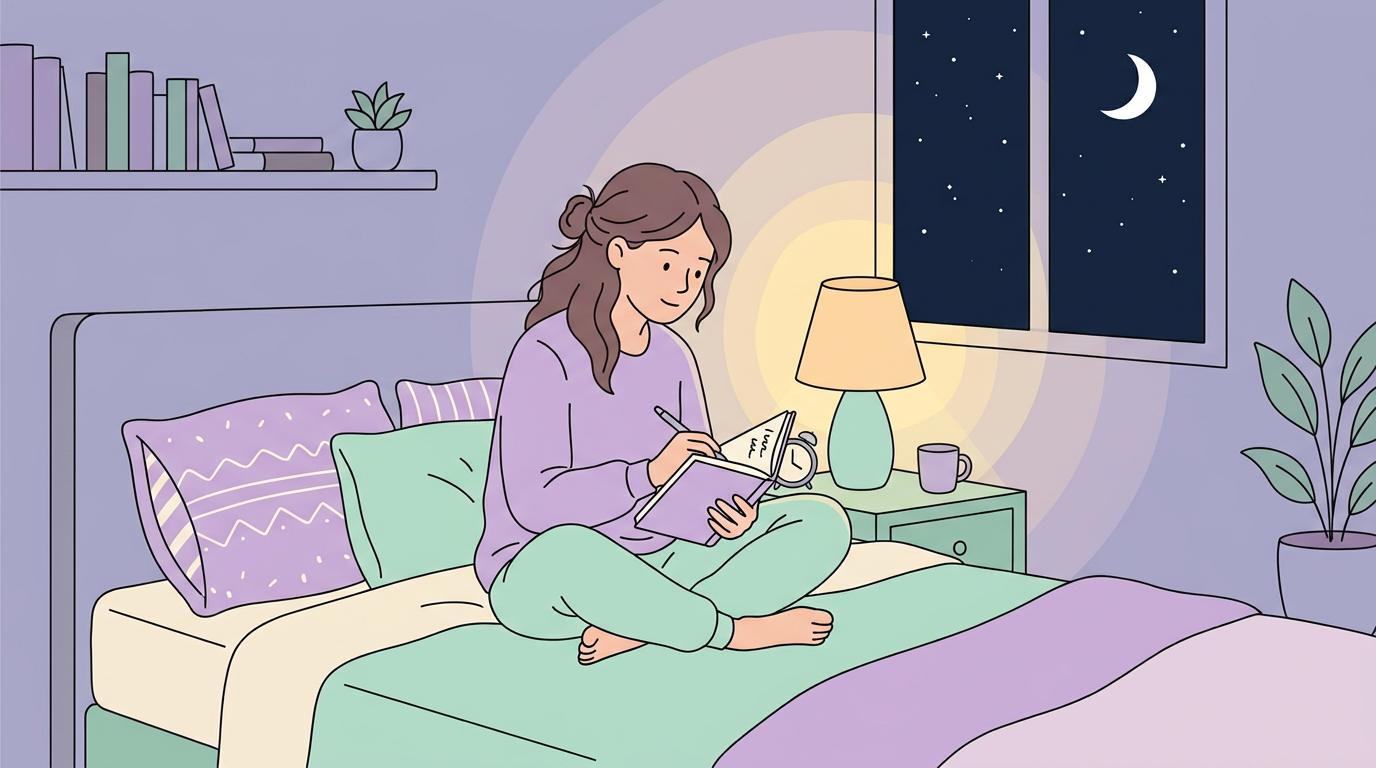
The fix is a “worry dump” — all you need is paper and a pen.
About 30 minutes before bed, write down everything on your mind. Not as a gratitude journal. Just: unload the mental browser tabs. Research from Baylor University found that writing a specific to-do list for tomorrow — not a reflection on today — significantly reduces how long it takes to fall asleep.
Here’s exactly what I do:
- Write tomorrow’s top 3 tasks
- Note anything I’m worried about forgetting
- One line on how I’m actually feeling — just to name it, not process it
Four minutes. Done.
Cut Caffeine Earlier Than You Think
The half-life of caffeine is 5–7 hours. Half the caffeine from your 3pm coffee is still circulating at 9pm.
Most people know caffeine can keep them awake. Fewer realize it affects sleep quality even when you fall asleep just fine — specifically your deep sleep and REM stages. Caffeine after 2pm tends to fragment those stages without you even noticing.
Try moving your last caffeine to before 1pm for two weeks. I genuinely can’t tell you the exact cutoff that works for your body — sensitivity varies based on genetics and liver enzymes — but earlier is always safer.
What to Do When You Wake Up at 3am
Do not lie in bed trying to force sleep. Frustration is the opposite of sleepy.
If you’ve been awake more than 20 minutes, get up. Go somewhere dim. Do something boring — read a physical book, fold laundry, sit quietly. Return to bed only when you actually feel sleepy.
This comes from Cognitive Behavioral Therapy for Insomnia (CBT-I), which outperforms sleep medication in long-term studies for chronic insomnia. The logic: you want your brain to associate the bed with sleep, not with lying awake and staring at the ceiling.
The Free Sleep Stack
Put it all together:
- Morning: Same wake time every day. 10–15 minutes of outdoor light within the first hour.
- Afternoon: Last caffeine before 1pm. A short walk if you can.
- Evening: Dim lights after 8pm. Warm shower 60–90 minutes before bed.
- Pre-bed: Four-minute worry dump on paper.
- Middle of the night: If awake 20+ minutes, get up and do something boring until sleepy.
No app. No supplement. No $200 sleep mask. Just habits.
Common Questions
Does melatonin actually help? For jet lag and shift work, yes — decent evidence. For general nightly sleep, the evidence is weaker than the marketing suggests. It’s also not free, so it’s outside the scope here — but worth knowing it’s not the magic fix it’s often sold as.
How long before I notice a difference? Two weeks of consistent wake time usually produces a real shift. The worry dump tends to work faster — many people feel it the first night they try it.
What if nothing works? CBT-I with a therapist is the gold standard for persistent insomnia. And if sleep issues are severe, see a doctor — conditions like sleep apnea won’t respond to habit changes alone.
Is napping okay? Short naps under 25 minutes before 2pm are generally fine. If you’re struggling to fall asleep at night, skip the nap for a few weeks and let the sleep drive build naturally.