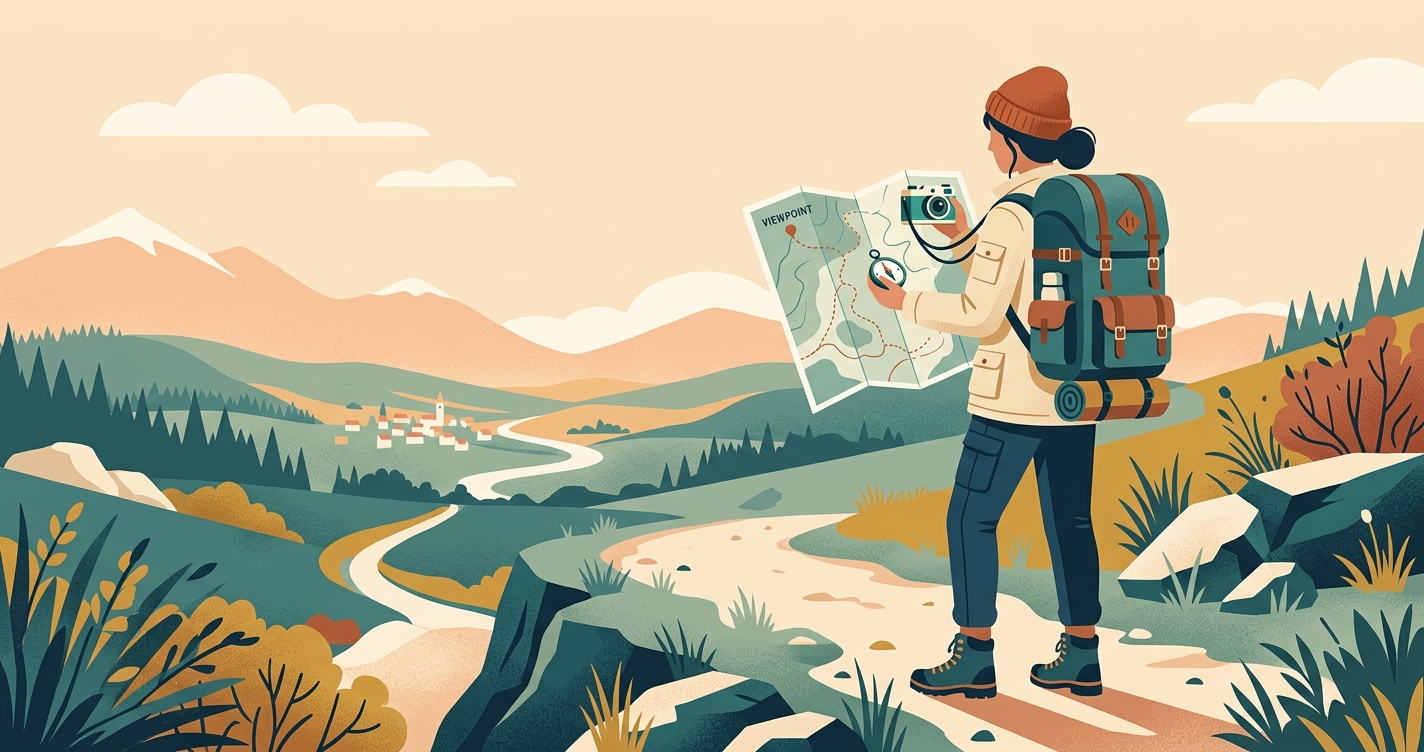
My first solo trip, I arrived in a city I’d never been to, at midnight, with a dead phone and no downloaded offline map. I found my hostel by asking three different strangers. It worked out — but it didn’t need to be that stressful, and it was entirely avoidable.
I’ve since taken solo trips to over a dozen countries, and the gap between my first trip and the ones that followed came down almost entirely to preparation. Most solo travel problems aren’t random bad luck — they’re the same few preventable mistakes. Here’s what I’ve learned.
Pre-Trip Prep (Where Most of the Safety Actually Happens)
Honestly, about 80% of travel safety is decided before you leave. I used to skip all of this. Don’t.
Copy Every Important Document
Make three copies of every critical document:
- Physical photocopies stored separately from originals (different bag, different pocket)
- Digital copies stored in cloud storage (Google Drive, iCloud, Dropbox)
- Email copies sent to yourself and one trusted person back home
Documents to copy:
- Passport (photo page and any visa stamps)
- Travel insurance policy (with claim phone number)
- Credit and debit cards (front and back)
- Flight confirmations and hotel bookings
- Driver’s license
- Emergency contact list
If your passport gets stolen in a foreign country and you have no copies, getting an emergency replacement at the embassy takes days and costs $150+. With a digital copy on your phone, the process is dramatically faster.
Get Travel Insurance (Non-Negotiable)
Travel insurance costs $30–80 for a two-week trip. A single emergency room visit abroad without insurance can cost $5,000–50,000 depending on the country.
What to look for in a policy:
- Medical coverage of at least $100,000 (for serious injuries or medical evacuations)
- Trip cancellation and interruption coverage
- Emergency evacuation coverage
- 24/7 assistance hotline
- Coverage for your specific activities (hiking, scuba diving, motorcycling)
Recommended providers: World Nomads is popular with backpackers and covers adventure activities. SafetyWing works well for longer trips with a monthly subscription model ($45/month). Allianz and Travel Guard are reliable for standard trips.
Pro tip: Some credit cards include travel insurance when you book flights with them. Chase Sapphire Preferred and Capital One Venture X both offer solid trip protection. Check your card benefits before buying a separate policy.
Set Up Emergency Contacts
Before you leave:
- Share your full itinerary with at least two people back home — flights, hotels, planned activities, and dates
- Register with your government’s travel program: US citizens should enroll in the State Department’s STEP program (Smart Traveler Enrollment Program). It’s free and alerts you to safety conditions and helps the embassy contact you in emergencies
- Save local emergency numbers in your phone: police, ambulance, and your country’s embassy or consulate in each destination
- Set up location sharing on your phone with a trusted contact — Google Maps and Apple Find My both offer continuous sharing
Research Your Destination
Spend 30 minutes researching safety conditions before you go:
- Government travel advisories: Check your country’s official travel advisory (travel.state.gov for US citizens, gov.uk/foreign-travel-advice for UK)
- Common scams at your destination: Every tourist city has 3–5 well-known scams. Knowing them in advance makes you nearly immune
- Neighborhoods to avoid: Most cities have areas that are fine during the day but risky at night. A quick search or Reddit thread will identify them
- Local customs and laws: Dress codes, photography restrictions, alcohol laws, and tipping norms vary wildly
Accommodation Safety
Where you sleep is your base of operations. Getting this right matters.
Hostels vs. Hotels vs. Rentals
Hostels are the best option for solo travelers who want a social safety net. Staying in a dorm means there are always people around, which is both a social benefit and a safety benefit. However, theft in dorms is common — never leave valuables unattended.
Hotels offer more privacy and security (locked room, front desk, sometimes a safe). They cost more but provide peace of mind, especially in less-developed destinations.
Airbnb/rentals are a middle ground but come with one risk: you’re alone in a stranger’s property. Always book places with 50+ reviews and a 4.5+ rating. Avoid places where the host insists on meeting you in person to hand over keys with no lockbox alternative.
How to Evaluate Accommodation Safety
Before booking, check:
- Location: Use Google Street View to virtually walk around the neighborhood. Is it well-lit? Are there shops and restaurants nearby?
- Reviews: Read the most recent 20 reviews, not just the overall rating. Look for mentions of safety, noise, neighborhood, and staff helpfulness
- Security features: Does the hostel have lockers? Does the hotel have a safe? Is there 24-hour reception?
- Solo traveler reviews: Filter for solo travelers if the platform allows it. Their concerns will match yours
Red flags in reviews: Mentions of theft, broken locks, unsafe neighborhood, aggressive staff, or “wouldn’t stay here alone.”
Arrival Safety
When you arrive at your accommodation:
- Arrive during daylight whenever possible, especially in unfamiliar cities
- Check the locks on your room door and windows
- Locate emergency exits — sounds paranoid, takes 30 seconds
- Don’t announce your room number loudly at reception
- Use the safe for your passport, extra cash, and backup cards
Money Safety (I Learned This the Expensive Way)
I once had my card blocked by my bank while abroad because I forgot to set a travel notice. I had $14 in cash and couldn’t reach my bank for 6 hours. It was fine in the end, but it was a bad six hours. Now I travel with redundancy built in.
The Two-Card Minimum Rule
Carry at least two debit cards and two credit cards from different banks. Store them in separate locations:
- Wallet: One debit card, one credit card
- Hidden in luggage: Second debit card, second credit card
- Digital backup: Apple Pay or Google Pay set up with at least one card
If your wallet is stolen, you still have financial access. If your luggage is stolen, you still have your wallet.
Best Cards for Travel
Cards with no foreign transaction fees save you 3% on every purchase abroad:
- Charles Schwab debit card: No ATM fees worldwide, no foreign transaction fees
- Wise (formerly TransferWise) debit card: Multi-currency account, excellent exchange rates
- Chase Sapphire Preferred: No foreign transaction fees, solid travel insurance included
- Capital One cards: Most have no foreign transaction fees
Cash Strategy
- Withdraw cash from ATMs rather than exchanging at currency desks (ATMs give better rates)
- Carry one day’s worth of cash in your wallet, the rest hidden in your bag
- Keep a $50–100 USD emergency stash separate from everything else — US dollars are accepted or exchangeable almost everywhere
- Avoid carrying large amounts of cash in cities known for pickpocketing (Barcelona, Rome, Paris, Bangkok)
The Hidden Wallet
A money belt or hidden wallet worn under your clothes holds your backup cards, emergency cash, and passport copy. Products like the Eagle Creek Undercover Money Belt ($15) or Pacsafe Coversafe ($20) are thin enough to wear comfortably all day.
This is not paranoia — it’s insurance. You’ll probably never need it, but when you do, it saves your trip.
Daily Safety Habits on the Road
These small behaviors compound into a much safer trip.
Awareness Basics
- Walk with purpose: Scammers and pickpockets target people who look lost. Even if you’re navigating, glance at your phone quickly and walk confidently
- Trust your gut: If a situation feels wrong, leave. You don’t owe anyone an explanation
- Limit alcohol: The majority of safety incidents involving solo travelers happen when alcohol is involved. Know your limits, especially in unfamiliar places
- Keep your phone charged: A dead phone means no maps, no translation, no emergency calls. Carry a portable charger (Anker 10000mAh is $20 and charges a phone 2–3 times)
Communication Safety
- Check in daily with someone back home — a quick text is enough
- Download offline maps in Google Maps or Maps.me before you arrive. You need navigation even without cell service
- Get a local SIM or eSIM: Airalo and Holafly sell eSIMs that work in most countries for $5–15 for a week of data. Having data means you always have maps, translation, and the ability to call for help
- Learn 5 key phrases in the local language: hello, thank you, help, how much, and where is
Transportation Safety
- Use official taxis or ride-sharing apps (Uber, Bolt, Grab depending on region). Avoid unmarked cars
- Share your ride details: Uber and similar apps let you share your trip with a contact in real time
- Sit in the back seat of taxis and ride-shares
- Pre-negotiate taxi fares or insist on the meter in countries where this is an issue
- Avoid arriving in new cities at night: Book flights and buses that arrive during daylight hours
Solo-Friendly Destinations for First-Timers
Some destinations are easier for first-time solo travelers than others. These score high on safety, ease of navigation, English accessibility, and solo traveler infrastructure:
- Japan: Extremely low crime, excellent public transit, clean, easy to navigate despite the language barrier
- Portugal: Affordable, welcoming, safe, great hostel scene, widely spoken English in tourist areas
- Iceland: Nearly zero violent crime, stunning nature, small and easy to navigate
- New Zealand: English-speaking, friendly locals, incredible outdoor activities, well-developed backpacker infrastructure
- Taiwan: Safe, incredible food, efficient transit, affordable, very welcoming to solo travelers
- Spain: Excellent hostel culture, affordable, good transit, vibrant solo travel community
- Canada: English-speaking, safe, diverse, great national parks
Avoid starting your solo travel career in destinations with complex security situations. Build confidence with easier destinations first.
Female Solo Travel: Additional Considerations
Women solo travelers face the same risks as everyone else plus some additional considerations. These tips come from experienced female solo travelers:
- Research cultural dress norms: In conservative countries, dressing modestly reduces unwanted attention significantly. This isn’t about fairness — it’s a practical safety tool
- Wear a fake wedding ring: In some cultures, a wedding ring signals you’re “taken” and reduces persistent approaches
- Book accommodation with good reviews from female solo travelers specifically
- Avoid ground-floor rooms in hotels and hostels when possible
- Join female solo travel communities: Facebook groups like “Girls LOVE Travel” (2M+ members) and “Solo Female Travelers” offer destination-specific safety advice from women who’ve been there
- Consider women-only dorms in hostels — many hostels offer this option
- Trust your instincts aggressively: If someone makes you uncomfortable, you don’t need a “good reason” to remove yourself from the situation
Common Scams to Avoid
These scams exist in tourist cities worldwide. Knowing them in advance is your best defense.
The friendship bracelet: Someone ties a bracelet on your wrist “as a gift” then demands payment. Keep your hands in your pockets if someone approaches with string or beads.
The taxi meter “broken”: Driver says the meter doesn’t work and quotes a flat rate 3–5x the real fare. Insist on the meter or leave and find another taxi. Better yet, use Uber or check the fare with a local before getting in.
The fake petition: Someone asks you to sign a petition (often for a fake charity). While you’re distracted, an accomplice pickpockets you. Never stop for petition signers in tourist areas.
The helpful local at the ATM: Someone offers to “help” you use the ATM. They’re memorizing your PIN. Always shield your PIN and never accept help from strangers at ATMs.
The closed attraction: A tuk-tuk or taxi driver tells you your planned destination is “closed today” and offers to take you somewhere else — usually a shop where they earn commission. Ignore this and go check for yourself.
The spill scam: Someone spills something on you, then “helps” you clean up while pickpocketing you. If someone spills on you in a crowded area, step away immediately and clean up yourself.
The overcharge at restaurants: A menu with no prices, or a different menu for tourists. Always confirm prices before ordering, especially in touristy areas.
Essential Apps and Tools
Download these before your trip:
| App | Purpose | Cost |
|---|---|---|
| Google Maps | Offline maps and navigation | Free |
| Maps.me | Backup offline maps with hiking trails | Free |
| Google Translate | Real-time camera translation and offline packs | Free |
| Wise | Multi-currency card and cheap transfers | Free (card is $9) |
| Airalo | eSIM data for 200+ countries | $5–15/week |
| TripIt | Automatic itinerary organizer | Free |
| Hostelworld | Hostel booking with solo traveler reviews | Free |
| Sitata | Real-time travel safety alerts | Free basic tier |
| XE Currency | Live exchange rates | Free |
| Communication standard in most countries | Free |
FAQ
Is solo travel safe for beginners?
Yes, with basic preparation. Millions of people travel solo every year, including first-timers, and the overwhelming majority have safe, positive experiences. The key is choosing an appropriate destination for your experience level, doing pre-trip research, and following standard safety practices like carrying backup money access and keeping someone informed of your plans.
What’s the biggest safety mistake solo travelers make?
Not having financial redundancy. The most common crisis isn’t violence or theft — it’s losing access to money. A single stolen wallet with your only debit card in a foreign country creates a genuine emergency. Carrying backup cards in a separate location solves this instantly and costs nothing.
How much money should I budget for safety gear?
About $50–100 covers the essentials: a money belt ($15–20), a portable charger ($20), a small padlock for hostel lockers ($8–12), and an eSIM for data ($5–15). Travel insurance adds another $30–80 for a two-week trip. Total investment: roughly $100–200 for gear and insurance that covers virtually every common safety scenario.
Should I tell people I’m traveling alone?
Be selective. Telling other travelers at hostels is fine and usually leads to good connections and safety in numbers. Telling random strangers on the street, taxi drivers, or people who approach you unsolicited — say you’re meeting friends or that your partner is at the hotel. There’s no reason to advertise your solo status to people you don’t trust.
What should I do if something goes wrong?
First, contact local emergency services (112 in most of Europe, 911 in the US and many countries, or the local number you saved in advance). Second, contact your embassy or consulate — they can issue emergency travel documents, recommend English-speaking doctors, and help contact family. Third, file a police report (required for insurance claims). Fourth, contact your travel insurance provider’s 24/7 hotline. Having all these numbers saved in your phone and written on paper means you can act quickly in any situation.
Is solo travel safe for women?
Yes, with additional precautions. Female solo travelers face some extra considerations, but millions of women travel alone safely every year. Start with destinations known for being solo-female-friendly (Japan, Portugal, New Zealand, Iceland), stay in accommodation with strong reviews from women, join online female travel communities for destination-specific advice, and trust your instincts without hesitation. The biggest factor in safety isn’t gender — it’s preparation.