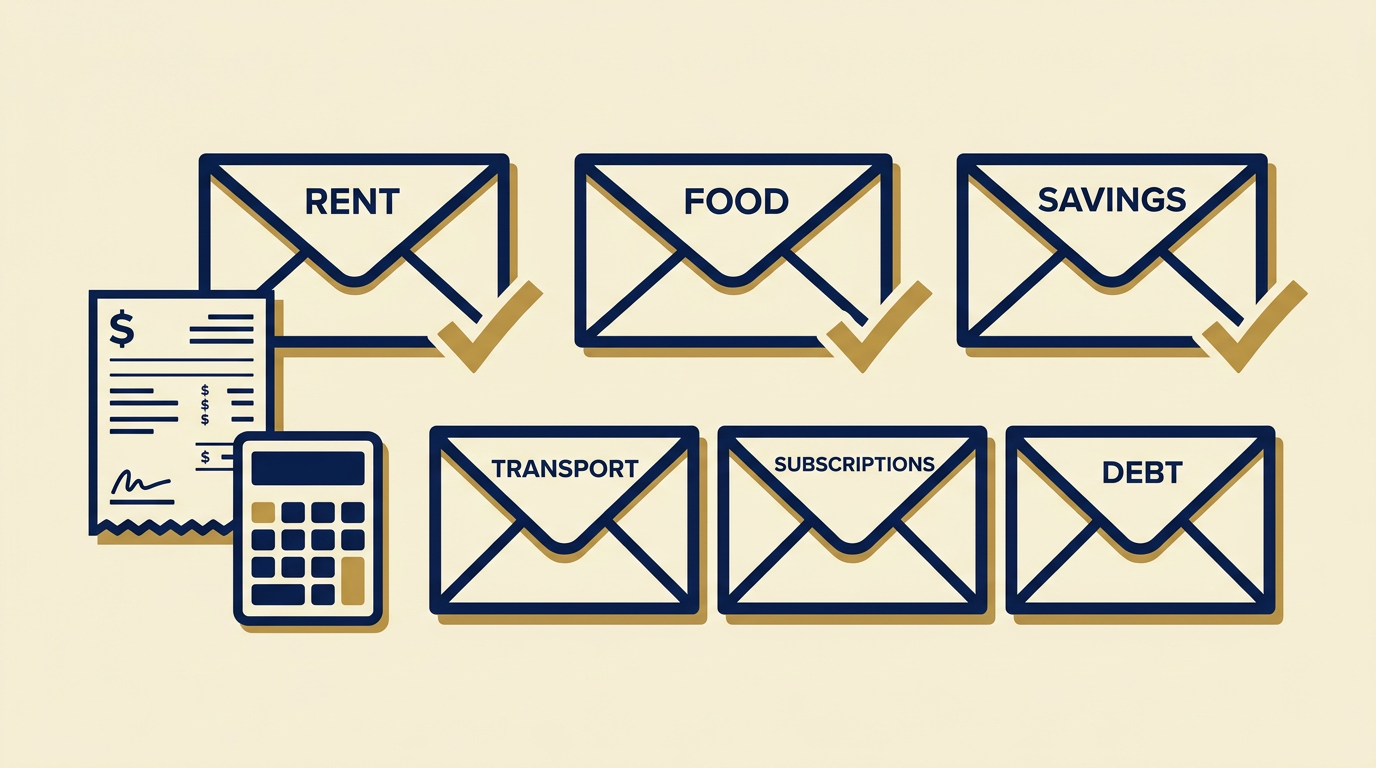
Two years ago I was making just under $60K and still felt broke every single month. Not “can’t afford a vacation” broke — “checking my balance before buying groceries” broke. It took me an embarrassingly long time to figure out that the problem wasn’t the income. It was that money was moving through my account with zero structure, like water through a sieve.
Here’s what I actually changed.
Your Take-Home Is the Only Number That Matters
$62K sounds workable until you break it down. After federal taxes and deductions, most people in this range take home somewhere between $3,800 and $4,200 a month. If you’re in a high-tax state like California or New York, it’ll be closer to $3,600. Texas, no income tax — closer to $4,200.
Run your last pay stub through a paycheck calculator before doing anything else. Seriously. Building a budget off your gross salary is the fastest way to overspend and feel confused about why nothing’s sticking. The take-home number is your actual operating budget. That’s the one that matters.
$4,000/month is workable. It just doesn’t forgive loose spending.
Zero-Based Budgeting vs. the “Whatever’s Left” Method
Most people I know at this income level run their finances on autopilot: fixed bills come out automatically, and whatever’s left over gets spent on… something. Nobody really tracks it. The “whatever’s left” method feels flexible but it’s actually just untracked.
Zero-based budgeting is the alternative — every dollar gets assigned a job before the month starts. Nothing floats.
Here’s a realistic breakdown on ~$4,000 take-home:
- Housing (rent + utilities): $1,400–$1,600
- Food (groceries + dining): $400–$500
- Transportation: $350–$450
- Subscriptions + phone: $150–$200
- Emergency fund transfer: $200 minimum
- Personal spending: $150–$250
- Debt payoff: whatever remains
The point of writing this out isn’t to follow it perfectly — it’s to find the gap on paper instead of at the ATM on the 27th of the month.
The Time I Blew $380 on Nothing
For about eight months, I had a streaming service, a gym membership, a news app, and a language learning app all charging me every month. Total: $87/month. I was actively using exactly one of them.
That’s $783 a year in recurring charges I’d forgotten about. And that was just the subscriptions. There were also multiple “small” food delivery fees that added up to another $90–120/month I couldn’t account for until I actually went through my bank statements.
That audit — two months of credit card statements, every recurring charge highlighted — revealed about $200/month I didn’t know I was spending. That money, automated into a savings account, changed my financial situation more than any income bump would have.
The $1,000 Buffer: Why This Comes Before Everything Else
The paycheck-to-paycheck trap isn’t just a spending problem. It’s a cushion problem. A $400 car repair or a $300 dental bill will end up on a credit card every single time until you have at least $1,000 sitting somewhere you don’t touch.
Before Roth IRA contributions, before aggressive debt payoff — build this buffer. Automate $150–$200 per paycheck into a separate savings account, ideally at a different bank than your checking so it’s slightly annoying to access. That friction is intentional.
The critical detail: schedule the transfer for the day your paycheck hits, not a few days later. Before your brain decides that money is available for spending.
High-Interest Debt vs. More Savings: What to Do First
Once the $1,000 buffer is in place, credit card debt at 20%+ APR becomes the priority. Carrying that balance on $62K is expensive — you’re paying for past purchases instead of building anything.
The sequence:
- List every debt with balance and interest rate
- Throw extra money at the highest-rate card first
- Don’t add new charges to cards you’re actively paying down
- When one card is paid off, roll that payment amount to the next
Meanwhile, if your employer has a 401(k) match, contribute enough to get the full match before doing anything else. That’s a 50–100% guaranteed return on that portion of your contribution, which beats paying down even high-interest debt.
Where $62K Actually Leaks
Most people at this income level aren’t blowing money on luxury trips. The leaks are smaller.
Subscriptions running on autopilot. Pull two months of statements and highlight every recurring charge. Cancel anything unused in the last 30 days.
Delivery fees and convenience spending. A few orders a week with fees and tips adds up to $200–400/month for a lot of people. Give this category a specific budget line and a cap. $80 is fine. The cap matters, not the number.
Housing taking too much. If rent alone is eating more than 35–40% of your take-home, the rest of the budget gets very tight very fast. That’s a structural problem no amount of cutting lattes will fix.
Realistic Timeline
The first month of doing this feels annoying and barely productive. Month two, the buffer is real but small. By month three, a $400 surprise doesn’t derail everything — and that’s the actual inflection point. The feeling of absorbing an unexpected expense without going to the credit card is different from anything a spreadsheet can show you.
The Federal Reserve’s Economic Well-Being survey points to the same practical lesson: even a small financial buffer changes how households absorb surprise expenses. The buffer itself changes behavior, not just finances.
$62K is enough. It just requires running the money intentionally instead of hoping it works out.
Common Questions
How long does it actually take? Most people see a real difference in 60–90 days once savings are automated and the budget is written down. Month one is mostly figuring out where money actually goes. That information alone is useful.
Can I build retirement savings and pay off debt at the same time? Yes — but probably not aggressively on both. Get the employer match first. Then knock out high-interest debt. Then come back to retirement contributions.
What if my rent is too high for this income? If rent is $1,500+ on a $4,000 take-home, the math is genuinely tight. A roommate, a cheaper neighborhood, or negotiating the next lease aren’t just theoretical options — they’re real budget moves.
App or spreadsheet? Either works. The tool matters far less than the habit of looking at spending on a regular schedule.
2026 Update: The Cash-Flow Fix Before the Budget Fix
Paycheck-to-paycheck living is often framed as a discipline problem. Sometimes it is. But a lot of the time it is a timing problem: bills land before income, annual expenses are treated like surprises, and irregular costs keep hitting the credit card.
The first fix I would make is a one-paycheck buffer. Not a full emergency fund yet. Just enough cash so this month’s bills are paid with money from last paycheck, not money you are waiting to receive. That buffer changes everything because it stops the panic cycle. You can make decisions before the due date instead of after the overdraft warning.
To build it, I would temporarily stop optimizing. Minimums on debt, no extra investing beyond an employer match, no aggressive sinking funds. The goal is to collect one paycheck’s worth of breathing room as fast as possible. Once that buffer exists, debt payoff and savings become easier because the checking account is no longer constantly at zero.
The second fix is converting non-monthly expenses into monthly line items. Car registration, insurance premiums, holiday travel, annual software, school costs, medical deductibles - these are predictable even if they are not monthly. Divide each by 12 and move that amount into a separate savings bucket every payday. This is boring, but it is the difference between a budget that looks good on paper and one that survives real life.
The third fix is choosing one leak to close at a time. If groceries, subscriptions, and dining out are all high, do not overhaul everything in one week. Pick the leak that is both large and easy to change. A $90 subscription cleanup beats three weeks of feeling guilty over coffee.
For neutral tools, use the CFPB budgeting worksheet and money tools as a baseline. This article is informational, not financial advice. If income is truly below essential expenses, budgeting alone will not fix it; the plan has to include income, housing, debt, or benefit changes.
The Metric I Would Track
The metric I would track is not net worth at first. It is days of cash. If rent, utilities, food, transport, insurance, and debt minimums cost $2,500/month, then every $83 in checking or savings is roughly one day of essential life covered. That framing makes progress visible before the emergency fund is fully built.
Going from two days of cash to ten days of cash changes how decisions feel. Going from ten to thirty changes them again. You can pay a bill when it arrives instead of timing it around payday. You can buy groceries before the paycheck hits. You can choose the cheaper annual insurance payment instead of the monthly one. That is how the cycle starts breaking.