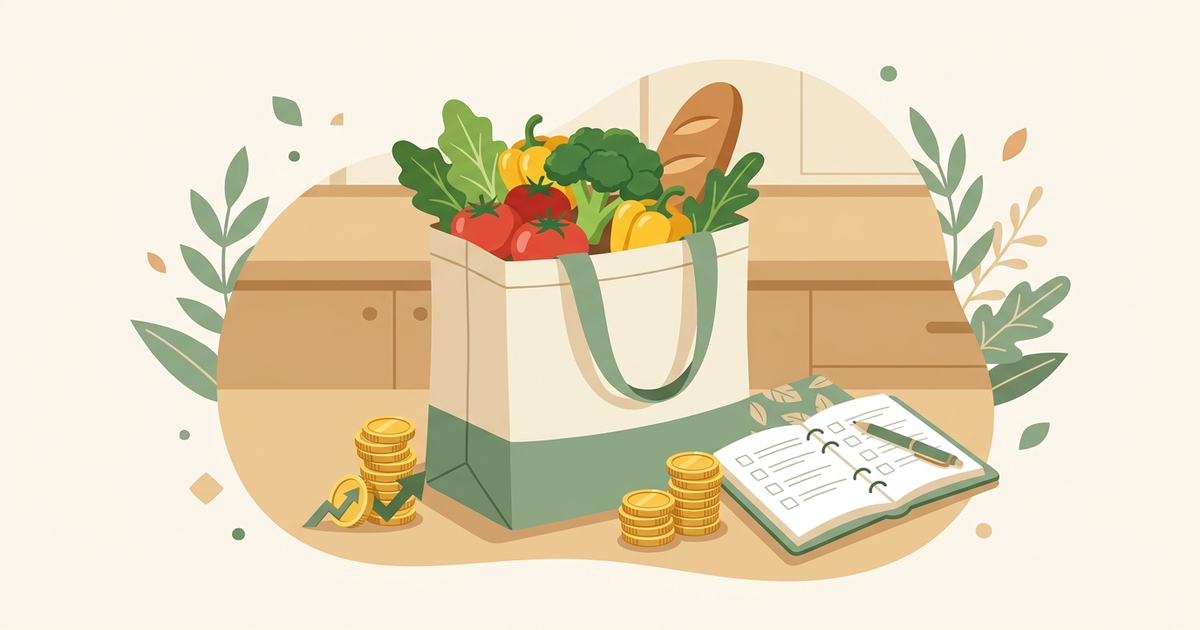
I was at a Costco in Seoul last month and olive oil had gone up about 30% from what I’d paid six months earlier. Not a slow creep — a jump. I stood there doing the math and thought: I should have bought more when I had the chance.
That’s the situation a lot of people are in right now. Grocery prices on imported goods have been climbing steadily, and the tariffs announced in early 2025 are fully hitting shelves through mid-2026. If you have some extra cash sitting in savings, buying shelf-stable staples now isn’t panic buying. It’s just getting ahead of a price increase you can already see coming.
What’s Actually Driving Prices Up
Roughly 15% of the U.S. food supply is imported. That includes things most kitchens run through regularly: olive oil, canned fish, pasta, coffee, chocolate, certain cheeses, a significant share of seafood. When tariffs increase on those categories, shelf prices follow — usually with a 3–6 month lag after the policy change.
Domestic food isn’t protected either. Fertilizers, farm equipment, and food-grade packaging materials are all affected by tariff policy. The cost increase travels downstream.
According to the Yale Budget Lab, tariffs are adding $650–$1,340 per household per year in 2026 across all goods. Food is one of the most visible categories where that’s showing up.
The relevant question isn’t whether prices will go up. They already are. The question is whether it makes sense to pay today’s price instead of next quarter’s.
Stocking Up vs. Panic Buying: Where the Logic Breaks Down
Buying in bulk before a known price increase is genuinely smart budgeting. If olive oil goes up 20% and you bought a three-month supply at last month’s price, you saved 20% on that portion of your grocery budget. No savings account guarantees that return in 90 days.
But here’s where it goes wrong: buying things you won’t actually use, overbying for your available storage, or spending money that’s already earmarked for rent or debt. That’s not stocking up — that’s creating a different problem while telling yourself it’s responsible.
The line I try to hold: stock up with disposable savings. Not the emergency fund. Not money that has another job. If you have cash sitting in a savings account earning 4–5% and you’re looking at a 15–20% price increase on things you buy every week, the math still favors buying now.
If your budget is tight, the approach is narrower — not a big stock-up run, just buying 4–6 weeks ahead on the highest-value staples you’d buy anyway.
What’s Worth Buying (And What to Skip)
Not everything is equally exposed to tariff pressure. Focus on items that are shelf-stable, things you actually cook with regularly, and categories most affected by import policy.
Worth buying more of:
- Canned fish (tuna, sardines, salmon) — heavily imported, prices already rising
- Olive oil — mostly imported from Europe and North Africa, directly tariff-sensitive
- Canned tomatoes and tomato products — pantry staple, often imported
- Dried pasta — inexpensive, lasts years, calorie-dense
- Rice and dried grains — long shelf life, buy a larger bag than usual
- Coffee and tea — both imported, both rising
- Canned beans and legumes — cheap protein, minimal tariff exposure risk
- Condiments with long shelf lives — soy sauce, fish sauce, hot sauce
- Chocolate and cocoa — cocoa is among the most tariff-affected categories right now
Lower priority:
- Fresh produce — buy what you’ll cook this week, nothing more
- Frozen prepared meals — worth having some, but not the focus here
- Anything that would require changing your cooking habits to use up
Skip anything you’re buying just because it feels like a good idea. The goal is buying more of what you already buy, not discovering new pantry staples you’ll ignore for two years.
A Simple Framework for How Much to Spend
Take your average monthly grocery spend. Multiply by 2–3. That’s a reasonable ceiling for a pantry stock-up representing two to three months of shelf-stable goods.
If you normally spend $400/month on groceries and you put an extra $300–400 into pantry staples now, that’s roughly a one-month buffer at today’s prices. If prices climb 15% over the next few months, you’ve saved around $60 on that buffer — while also giving yourself flexibility if income gets tight.
If budget is already stretched: even $50–100 shifted toward high-value staples makes a real difference. A $30 case of canned goods can cover a week of protein. The principle doesn’t change when money is tight — you just work with a smaller scope.
Using Savings for This — That’s Exactly the Point
A lot of personal finance content treats savings as purely forward-looking: emergency fund, retirement, big purchase fund. That framing misses something.
A portion of savings exists to let you make smart moves in the present. If you have a healthy emergency fund — roughly 3–6 months of expenses — a grocery stock-up run isn’t touching that. You’re using additional, unearmarked savings for something with a real near-term return.
High-yield savings accounts are earning around 4–5% APY right now, which is genuinely good. But if a specific category you buy regularly is going up 10–20% due to tariff pressure, spending some of that cash now beats leaving it in an account for the next 90 days.
This isn’t the moment to panic. It is a reasonable moment to be intentional.
How to Do the Shopping Run Without Overspending
Once you’re in “stock-up mode,” the temptation is to buy everything that looks like a deal. That’s how you end up with six jars of tahini and no shelf space.
Before you go:
- Write down the 10–15 things you buy most often that are shelf-stable
- Set a budget ceiling and keep a running total on your phone
- Check what you already have — don’t double-stock things you’re holding
At the store:
- Compare unit prices, not package prices — bigger isn’t always cheaper per ounce
- Store brands on staples (pasta, canned beans, rice) — quality gap is usually minimal
- Warehouse stores are worth the trip specifically for olive oil, canned fish, coffee, and grains
- Don’t buy fresh produce you won’t cook before it turns, no matter how good the deal looks
Online:
- Amazon Subscribe & Save on non-perishables you go through consistently
- Thrive Market if you buy specialty or organic items — the membership pays off quickly on a big pantry order
A well-executed stock-up run should feel boring. You’re buying the future version of what you’d buy anyway.
One Clear Line
If your savings situation puts you at a choice between stocking up and keeping the emergency fund intact — don’t touch the emergency fund. A stocked pantry is useful. A depleted emergency fund when something breaks is a financial crisis.
If you’re in that situation and still want to do something, even $30–50 toward high-calorie, long-shelf-life staples (rice, lentils, canned beans, oats) makes a meaningful difference without real financial risk. The emergency fund still comes first — these two goals don’t have to compete if you’re working with limited funds.
Common Questions
Does buying now actually save money, or is this anxiety spending? It saves money when prices are genuinely rising on items you’d buy anyway. It doesn’t save money if you’re buying things you won’t use, or buying with debt. The math only works when you’re substituting future spending for present spending — not adding to your total spending.
How long do pantry staples actually last? Dried pasta and white rice: 2–5 years easily. Canned goods: 2–5 years depending on storage conditions. Cooking oils: 1–2 years after opening. Coffee (sealed): up to a year past roast date. Best-by dates on shelf-stable goods are quality estimates, not safety deadlines.
Should I buy fresh produce in bulk? Only if you have a plan to use or preserve it. A 10-pound bag of potatoes makes sense. Five pounds of strawberries that go bad in four days doesn’t. For fresh produce, buy only what the next 5–7 days of cooking actually requires.
What if prices don’t rise as much as expected? You still have food you were going to buy anyway — you just bought it earlier. The downside is the opportunity cost of that cash. For most people with savings in a regular account, there’s no meaningful downside to a well-stocked pantry.
For official food price context, compare your receipts against the USDA ERS Food Price Outlook. This article is informational, not financial advice; do not use debt or emergency-fund money for bulk grocery purchases.